[themify_quote]“He who would understand the Plains must ascend the Eternal Hills, where a man’s eyes scan Infinity. Be he who would make use of understanding must descend on the Plains where Past and Future meet, and men have need of him.” — Talbut Mundy, Om-The Secret of Abbor Valley[/themify_quote]
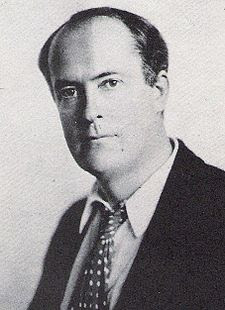
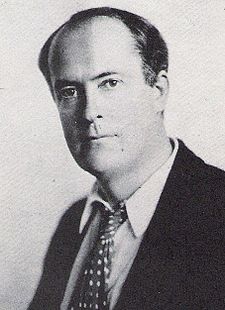
Talbut Mundy
Talbot Mundy was born in England as William Lancaster Gibbon but used the name Talbot Mundy when he started to be published in 1911. Probably, he also wanted to put his English past behind him as he became highly critical of British colonial policy, though he remained influenced by the example and the writing style of Edward Bulwer-Lytton who tried to use the popular novel such as Zanoni(1842) as a way of shaping mass public opinion. In Zanoni, Zanoni is an immortal sage and member of a secret brotherhood dedicated to helping humanity and holding esoteric knowledge. Bulwer-Lytton was an early advocate of feminism with the idea that women are more spiritually advanced than men, a theme that Talbot Mundy develops in his books.
Talbot Mundy left home when he was 16 to go to India, then Africa, the Middle East, and finally settled in the USA. He took a different wife in each geographic area, perhaps as a way to understand the culture better. The women characters in his novels are all a doorway to deeper understanding of spiritual insights and as keepers of the best of the specific culture. He went to India first in 1899 as a relief worker in Baroda and then in 1901 to report for newspapers on the fighting on the north west frontier, which served as background for King of the Khyber Rifles.(1916) He met his first wife, an Englishwoman living in India and married in 1903. He developed a dislike for English colonial life in India with its contempt for Indian culture. He absorbed the Indian myths of spiritual masters and secret societies that were positive agents of world events — themes that he developed especially in his The Nine Unknown (1924) — a secret society founded by the Emperor Asoka around 270 BCE and which continued to the present, helping social and political reforms but secluded from open view. It is a theme developed later in Black Light and for short stories which he wrote in the USA for Adventure, a magazine of popular fiction.
Influenced by the example of Richard Burton (1821-1890) who combined experiences in India and Africa along with an interest in sexual practices — Burton having translated and introduced to Western readers the Kama Sutra, Talbot Mundy left India for Africa, where he met the woman who became his second wife. Africa played a lesser role in his novels but served as background for many of his short stories. After his short stay in Africa, he moved to the USA, where he divorced again and married his third wife, who was a member of a religious movement with its roots in New England, Christian Science.
From his Christian Science wife, he absorbed the idea of the power of positive thinking which fitted in with the thought power of Indian yogis. Talbot Mundy became President of the Christian-Science-related Anglo-American Society Relief Effort for Palestine, a society that was focused on aid for the Armenians who had fled what had become Turkey and were now living in the Middle East, especially Lebanon and Palestine. In 1921, Mundy left the US to work in the Middle East, both to help administer the relief efforts and to write for the Jerusalem News.
By 1922, he had again divorced and married his fourth wife, Sally, who had also been doing relief work in the Middle East. Mundy, who was already critical of British colonial policy in India, quickly came to dislike British policy in the Middle East. He wrote a series of novels and short stories with Jim Grim, an English intelligence agent, as hero and as an avenue for Mundy’s cynical views on English policy-making.
By 1924, he had moved back to the USA where he lived in San Diego, California at the Point Loma Theosophical Movement headquarters. There he wrote his best theosophical novel, Om, the Secret of Abbor Valley. The novel was written by Talbot Mundy to express the working of karma that ancient law of individual responsibility which gives humans their dignity.
[themify_quote]
“We act and react, do and leave undone, think and refuse to think, stand firm or are seduced while karma – incorruptible and inescapable – inscribes our spiritual progress on the rolls of destiny The Law adjusts all balances and measures, the exact effort of every thought and deed, directing each hidden motive.”
[/themify_quote]
For five years he was the editor of The Theosophical Path, and worked closely with Katherine Tingley (1847-1929), the head of the Point Loma movement. In 1929, he left Point Loma for New York City, where he took rooms at the Masters Building on Riverside Drive which had been created by Nicholas Roerich as a center for interaction among all the arts — music, painting, dance — . Mundy used some of Nicholas Roerich’s experiences in Asia, especially Tibet, and Roerich’s interest in Shambhala, a hidden city from which spiritual masters would send messengers to influence positively world events. Much of the Shambhala myth is used in Mundy’s King of the World. In New York, Mundy was active in theosophical and astrological circles, though none of his New York writings matched the power of Om,which merits being discovered by those who have not read it. For his bread and butter, Mundy wrote the radio scripts for the popular youth radio program “Jack Armstrong: the All-American Boy”. Jack Armstrong was the adventure side of Talbot Mundy without the spiritual dimension or the political critique.
NOTE:
(1) For a fuller account of his life see Peter B. Ellis The Last Adventurer: The Life of Talbot Mundy(1984).
[themify_hr color=’red’ border_width=’2px’]
[themify_box]
Rene Wadlow
Rene Wadlow
is the President of the Association of World Citizens, an international peace organization with consultative status with ECOSOC, the United Nations organ facilitating international cooperation on and problem-solving in economic and social issues.
Select a WP Edit Snidget below to add it to your post or page. Yes, they can be used in content areas too!
is a retired physician who practiced holistic, non-drug, mental health care for the last decade of his forty year family practice career. He is a contributor to and an endorser of the efforts of the Citizens Commission on Human Rights and was a member of MindFreedom International, the International Center for the Study of Psychiatry and Psychology, and the International Society for Traumatic Stress Studies.
While running his independent clinic, he published over 400 issues of his Preventive Psychiatry E-Newsletter, which was emailed to a variety of subscribers. (They have not been archived at any website.) In the early 2000s, Dr Kohls taught a graduate level psychology course at the University of Minnesota Duluth. It was titled “The Science and Psychology of the Mind-Body Connection”.
Since his retirement, Dr Kohls has been writing a weekly column (titled “Duty to Warn”) for the Duluth Reader, an alternative newsweekly published in Duluth, Minnesota. He offers teaching seminars to the public and to healthcare professionals.
[/themify_box]
">Gary G Kohls George Monbiot[/caption]
Studied in Oxford University, columnist with The Guardian newspaper, also the author of the bestselling books The Age of Consent: A Manifesto for a New World Order and Captive State: The Corporate Takeover of Britain, as well as the investigative travel books Poisoned Arrows, Amazon Watershed, No Man’s Land, How Did We Get into This Mess? Politics, Equality, Nature and other.
Prof Johan Galtung was born in Oslo. He earned the PhD degree in mathematics at the University of Oslo in 1956, and in 1957 a year later completed the PhD degree in sociology at the same university.
Prof Johan Galtung received nine honorary doctorates in the fields of Peace studies, Future studies, Social sciences, Buddhism, Sociology of law, Philosophy, Sociology and Law.
State Councilor of St. Petersburg, Russia. Founding President, Global Harmony Association (GHA) since 2005. Honorary President, GHA since 2016. Director: Tetrasociology Public Institute, Russia. Philosopher, Sociologist and Peacemaker from Harmony. Author of more than 400 scientific publications, including 18 books in 1-12 languages. Author of Tetrism as the unity of Tetraphilosophy and Tetrasociology – science of social harmony, global peace and harmonious civilisation. Director, GHA Web portal “Peace from Harmony”. Initiator, Manager, Coauthor and Editor in Chief of the book project “Global Peace Science” (GPS).
[/themify_box]
First published at :
">Leo M Semashko Robert C Koehler[/caption]
writes for the Huffington Post, Common Dreams, OpEd News and TruthOut. He considers himself a “peace journalist.” He has been an editor at Tribune Media Services and a reporter, columnist and copy desk chief at Lerner Newspapers, Chicago. Koehler launched his column in 1999. Robert Koehler has received numerous writing and journalism awards over a 30-year career in USA. He writes about values and meaning with reverence for life. He is praised as “blatantly relevant” and “a hero of democracy”.
[/themify_box]
First published at :
">Robert C KoehlerRobert J Burrowes PhD[/caption]
has a lifetime commitment to understanding and ending human violence. He has done extensive research since 1966 in an effort to understand why human beings are violent and has been a nonviolent activist since 1981. He is the author of ‘Why Violence?‘
He has been a radio producer (Earthstar Radio, San Francisco), organized and worked with the homeless, and is an advocate/activist in the nonviolent protest movement for safe energy, human rights, and peaceful solutions.
He is USA Vice President of the World Constitution and Parliament Association whose mission is to build a parallel world body to the United Nations, an emerging Earth Federation with a Provisional World Parliament under the Earth Constitution.
[/themify_box]
First published at:
">Roger Kotila PhDProf Richard Falk[/caption]
an international relations scholar, professor emeritus of international law at Princeton University, author, co-author or editor of 40 books, and a speaker and activist on world affairs.
Since 2002 he has lived in Santa Barbara, California, and taught at the local campus of the University of California in Global and International Studies, and since 2005 chaired the Board of the Nuclear Age Peace Foundation. His most recent book is Achieving Human Rights (2009).
[/themify_box]
First published at :
">Richard FalkDr Gray Corseri, PhD[/caption]
is a member of the TRANSCEND Network for Peace, Development and Environment. He has published and posted articles, fiction and poems at hundreds of venues, including, TMS, The New York Times, Village Voice, Redbook Magazine and Counterpunch.
He has published 2 novels and 2 collections of poetry, and his dramas have been produced on PBS-Atlanta and elsewhere. He has performed his poems at the Carter Presidential Library and Museum and has taught in universities in the US and Japan, and in US public schools and prisons.
[/themify_box]
First published at :
">Gary CorseriAntonio Carlos Silva Rosa, Editor, TMS[/caption]
born 1946, is the editor of the pioneering Peace Journalism website, TRANSCEND Media Service-TMS, an assistant to Prof. Johan Galtung, and Secretary of the International Board of the TRANSCEND Network for Peace, Development and Environment.
He completed the required coursework for a Ph.D. in Political Science-Peace Studies (1994), has a Masters in Political Science-International Relations (1990), and a B.A. in Communication (1988) from the University of Hawai’i.
Originally from Brazil, he lives presently in Porto, Portugal. Antonio was educated in the USA where he lived for 20 years; in Europe/India since 1994.
[/themify_box]
First published at :
">Antonio Carlos Silva Rosa
John Scales Avery is a theoretical chemist, Associate Professor Emeritus, at the University of Copenhagen, Denmark. He is noted for his books and research publications in quantum chemistry, thermodynamics, evolution, and history of science. His 2003 book Information Theory and Evolution set forth the view that the phenomenon of life, including its origin, evolution, as well as human cultural evolution, has its background situated in the fields of thermodynamics, statistical mechanics, and information theory.
He is an Indian citizen & permanent resident of Australia and a scholar, an author, a social-policy critic, a frequent social wayfarer, a social entrepreneur and a journalist;He has been exploring, understanding and implementing the ideas of social-economy, participatory local governance, education, citizen-media, ground-journalism, rural-journalism, freedom of expression, bureaucratic accountability, tribal development, village development, reliefs & rehabilitation, village revival and other.
For Ground Report India editions, Vivek had been organising national or semi-national tours for exploring ground realities covering 5000 to 15000 kilometres in one or two months to establish Ground Report India, a constructive ground journalism platform with social accountability.
He has written a book “मानसिक, सामाजिक, आर्थिक स्वराज्य की ओर”on various social issues, development community practices, water, agriculture, his ground works & efforts and conditioning of thoughts & mind. Reviewers say it is a practical book which answers “What” “Why” “How” practically for the development and social solution in India.
worked as a mediator for the church in Belfast; as faculty at The School of Peace Studies, University of Bradford, and as Executive Director, the Right Livelihood Award Foundation. He has founded several Indian NGOs, is an Officer of the Order of Canada, and a member of the TRANSCEND Network for Peace, Development and Environment.
[/themify_box]
First published at -
">Vithal RajanRene Wadlow[/caption]
is the President of the Association of World Citizens, an international peace organization with consultative status with ECOSOC, the United Nations organ facilitating international cooperation on and problem-solving in economic and social issues.
[/themify_box]
">Rene WadlowBaher Kamal[/caption]
[themify_box]
Baher Kamal
Egyptian-born, Spanish-national secular journalist. He is founder and publisher of Human Wrongs Watch. Kamal is a pro-peace, non-violence, human rights, coexistence defender, with more than 45 years of professional experience. With these issues in sight, he covered practically all professional posts, from correspondent to chief editor of dailies and international news agencies.
[/themify_box]
Credits :
">Baher KamalRosa Dalmiglio with Lama Mongolia[/caption]
She is a member of the China Council Disabled People’s Performing Art Troupe (special art, culture and humanity), which touches the hearts of all people and portrays the strong willpower so encouraging to 60 million Chinese disabled persons.
Ms. Dalmiglio is Intermediary Agent of CICE, Centre International Cultural Exchange, a direct subsidiary of the Ministry of Culture, People’s Republic of China. CICE is a comprehensive institution engaged in cultural exchange programs, professional publication and presentation of cultural art works such as exhibits, receiving foreign art troupes and artists, holding international cultural research programs, and producing intercultural and interreligious documentary films.
She is a member of China Disabled Person’s Federation, CDPF. She is also a member of the International Women Federation, which is concerned with the financial ethics of women s enterprises in underdeveloped areas.
[/themify_box]
credits:
">Rosa Dalmiglio
Director, Guru Arjan Dev Institute of Development Studies.
A recipient of Cultural Doctorate of Philosophy of Economics from USA. He is an active member of various professional bodies, namely -
He participated and presented papers in various International/national/regional seminars, conferences etc.. He remained member of the Academic Council of Punjab Technical University, Jalandhar. An unwearied researcher has about 200 research papers published in various international and national journals of repute and 15 research monographs to his kitty. Besides, he has authored/co-authored /edited 15 books which have been well received and highly acclaimed during his three decades of professional career. He was honoured by various national and international awards, namely, Guru Draunacharya Samman, Vijay Rattan Award and so on.
Dr Ron Paul served in U.S. House of Representatives three different periods: first from 1976 to 1977, after he won a special election, then from 1979 to 1985, and finally from 1997 to 2013.
During his first term as a member of the U.S. House of Representatives, Paul founded the Foundation for Rational Economics and Education (FREE), a non-profit think tank dedicated to promoting principles of limited government and free-market economics. In 1984, Paul became the first chairman of the Citizens for a Sound Economy (CSE), a conservative political group founded by Charles Koch and David Koch 'to fight for less government, lower taxes, and less regulation.' CSE started a Tea Party protest against high taxes in 2002. In 2004, Citizens for a Sound Economy split into two new organizations, with Citizens for a Sound Economy being renamed as FreedomWorks, and Citizens for a Sound Economy Foundation becoming Americans for Prosperity. The two organizations would become key players in the Tea Party movement from 2009 onward.
Dr Paul proposed term-limit legislation multiple times, while himself serving a few terms in the House of Representatives. In 1984, he decided to retire from the House in order to run for the U.S. Senate, complaining in his House farewell address that 'Special interests have replaced the concern that the Founders had for general welfare.... It's difficult for one who loves true liberty and utterly detests the power of the state to come to Washington for a period of time and not leave a true cynic.'
He is known nationally and internationally as a pioneer figure in the study of culture and psychopathology who challenged the ethnocentrism and racial biases of many assumptions, theories, and practices in psychology and psychiatry.
In more recent years, he has been writing and lecturing on peace and social justice. He has published 15 edited books, and more than 250 articles, chapters, book reviews, and popular pieces.
[/themify_box]
Credits:
">Anthony J. Marsella, Ph.D.Jason Hickel[/caption]
He is international consultant of the UN – FAO and international consultant for sustainable development and sustainable future of humankind of Universal State of the Earth - USE.
On 8th October 2016 he was appointed as The Chairman of the Humanity, Nature, Space and Environment protection Committee of the USE, the Supreme Council of Humanity - SCH from Athens, Greece and London, UK.
He is researcher working on: Nature; the Nature, Space and Environment protection; the Climate change system; System thinking; Globalization and global studies; Networking, Complexity and Swarm research: Sustainable Development and Sustainable Future of Humankind. He was among the pioneers researchers (1986 – 1994) to apply nature, space, and environment protection in a local community by activities we call today Local Agenda 21 Processes – a holistic program for survival of our civilization under new challenges of the third millennium.“Commencing from Local Community Sustainable Future and moving towards Sustainable Future of the Global Community of Humankind”.
He is independent researchers with many domestic and international publications and talks. Together with many researchers in co-operation worldwide within philosophy, operational research, global studies, case studies and complex problem solving research, system thinking, requisitely holism, networking and complexity, swarm research, integration and disintegration of matter and energy and universal upbringing, education and lifelong learning. He is contributing a systemic, requisitely holistic and a better understanding of the present. His latest research within the system theory, system thinking, networking, complexity and swarm research may provide a possible answer enabling people to better understand our world of humans.
During 2014 he completed 50 years of research work (1964 - 2014). This year he completed 50 years of been Dr. Vet. Med. Since 1986 he worked on the protection of Humanity, Nature, Space and Environment and completed 30 years of research.
For research on the climate change system and the book “System Thinking and Climate Change System (Against a big “Tragedy of Commons” of all of us), Ecimovic, Mayur, Mulej and co-authors, 2002, he was nominated for the Nobel Prize 2003. His work on “The Information Theory of Nature” was his second nomination for The Nobel Prize during 2007 in Physics. His third nomination for The Nobel Prize in Physics 2010 was for “The Environment Theory of the Nature”, published in the book “Three Applications of the System Thinking”, Ecimovic, 2010. Within last 10 years he has contributed trilogies: “The Nature”, “The Sustainable Future of Mankind” and “The Life 2017” – please see at: www.institut-climatechange.si
I grew up in Chile, got my medical degree there, began an academic career in 1970, and left for the USA due to the military coup in early 1974. My first job in the USA was working as a public nutrition professor in the international programme of Meharry Medical College in Nashville, Tennessee.
I started to travel to Africa in 1975, and worked a year in Cameroun in 1980 helping to prepare their five-year nutrition plan. I then moved to New Orleans, to Tulane University’s School of Public Health, and taught in the department of nutrition for ten years, before moving to Nairobi where I was an advisor in the Ministry of Health. Seven years there got me into extensive consulting in Africa, often on nutritional issues. In 1995 moved to Vietnam where I worked for two and a half years in the Ministry of Health as a senior primary health care advisor.
Many years of touching the reality on the ground, in Latin America, then the USA, then Africa and Asia, has made me understand that the real challenge is in the social and political determinants of malnutrition. I have devoted my writings and teaching to that. Over the years, I have found an important shift in my colleagues’ attitude and understanding towards acknowledging the basic causes of malnutrition. But yet I see little happening as a result. I submit that it is our guild’s lack of experience in the political arena that explains this dichotomy. I devote much of my energy to bridge this gap, and am a fervent advocate of empowering claim holders to demand needed changes from duty bearers. Nutrition is a perfect port of entry for that. Equity, social justice and people’s empowerment in a human rights sense is what really will make a difference.
There is no alternative but to deal with nutrition problems as indivisibly linked to social, political and environmental problems. We need to address them as such. The question is: are we all prepared to do that? The answer, in my view, decides whether we are part of the solution or part of the problem. Travelling and living in different parts of the world has reinforced my conviction that we need to get down from our academic ivory towers, and need to change the curricula of our young and upcoming colleagues, to give them the tools to act in such a context. To me, public health nutrition cannot be anything but that.
[/themify_box]
">Claudio Schuftan Dr MDProf. Ram Puniyani[/caption]