click for The International Board
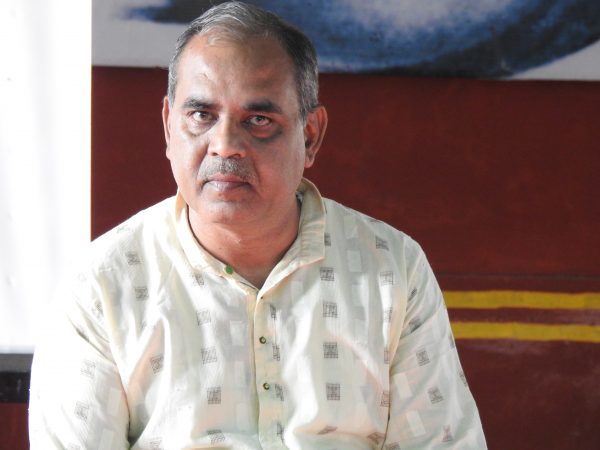
Editor in Chief -
Prof Surendra K Pathak PhD
Ph.D. (Linguistics -Journalism) Inter-disciplinary Research
M.J.M.C. (Mass Communication & Journalism)
M. Tech. (Applied Geology 3 Yrs)
Editor of Journals:
- Editor-in-Chief, Journal of Advanced Research in Journalism & Mass Communication, form 2014 ISSN: 2395-3810 (http://management.adrpublications.com/index.php/JoARJMC/index)
- Editor, International Journal of Advance Research in Peace, Harmony & Education has been allotted with the ISSN: 2455-9326. (http://science.adrpublications.com/index.php/IJoARPHE)
- Member of Advisory Board, Journal Horizons of Holistic Education" (ISSN/EISSN 2349-8811) International Quarterly Peer Reviewed Journal published by Children University, Gujarat.
- Editorial Board Members, Journal- Environment and Social Psychology, (ISSN: 2424-7979(Print) 2424-8975(Online)) (http://esp.whioce.com/index.php/ESP/about/editorialTeam)
- Member, Board of Editor, Bat Shiksha Ki "बात शिक्षा की" a university research journal published by I.A.S.E. (D) University, Sardarshahar, Rajasthan from 2012
- Member, Board of Editors, Journal' The Journal of Global Resources'. (2014) ISSN: 2395-3160 (Print) ISSN: 2455-2445 (Online) (http://www.isdesr.org/content/editorial-board)
- Member, International Advisory Board: Ground Report India Journal www.groundreportindia.com since 2012
- Worked as Editors (Hindi section) "MANJU FEATURES" of University's Feature Agency of Makhanlal Chaturvedi National University of Journalism, Bhopal from Oct 2001 to March 2005.
- I worked as Assistant Editor of "मीडिया मीमांसा" Media Mimansa the University Journal of Makhanlal Chaturvedi National University of Journalism and Mass Communication, Bhopal, from year 2005 to 2007.
- 10.Assistant Editor, a University Research Journal of Mahatma Gandhi Chitrakoot Gramodaya University, Chitrakoot, Satna, in 1993-94.
- Honorary association:
- Bureau Chief, Newsleaks (News Portal: New Delhi), South-East Asia
- Advisor: Paryavaran Urja Times (Raipur)
- Editor: Sarthak Samvad (Bhopal)
- Subject Expert: Samagam- Journal for media and cinema Bhopal(During 1994 to 2000)
- Former Chief Sub Editor: Free Press (Indore),
- Former General Manager: Free Press (Raipur),
- Former Editorial Advisor: Swadesh (Raipur, Bhopal),
- Former News Editor: Deshbandhu (Bhopal)
- Former member Editorial Board: Media Mimansa (MCRPVV Journal, Bhopal)
- Member of International Scientific Committee/Advisory Board
- Member of International Scientific Advisory Board of the INTCESS14 – International Conference on Education and Social Sciences held in Istanbul –Turkey, Feb 3-5, 2014, organised by O.C.E.R.I.N.T.- International Organisation Centre of Academic Research, Kartal /Istanbul - TURKEY.
- Member of the International Scientific Advisory Board of SOCIO-INT14- INTERNATIONAL CONFERENCE ON SOCIAL SCIENCES AND HUMANITIES will be held in Istanbul (Turkey) on the 8th, 9th, and 10th of September 2014, organised by O.C.E.R.I.N.T.- International Organisation Centre of Academic Research, Kartal /Istanbul – TURKEY.
- Member of the International Scientific Committee of the International Conference on Education and New Developments 2015 (E.N.D. 2015) organised by The World Institute for Advanced Research and Science (W.I.A.R.S.), Portugal http://end-educationconference.org/2015/
- Member of the International Scientific Committee of the International Conference on Education and New Developments 2016 (E.N.D. 2016) organised by The World Institute for Advanced Research and Science (W.I.A.R.S.), Portugal http://end-educationconference.org/2016/scientific-committee/
- Member of the International Scientific Committee of the International Conference on Education and New Developments 2017 (E.N.D. 2017) organised by The World Institute for Advanced Research and Science (W.I.A.R.S.), Portugal http://end-educationconference.org/scientific-committee/
- Member of International Advisory Committee of "5th International Conference on Global Peace through Emotional Intelligence (E.I.), Inclusive Education, Positive Psychology and Unity in Cultural Diversity" Held on November 1, 2014, in Kathmandu, Nepal, organised by World Without Anger (W.W.A.) and Global Peace Foundation (GPF), Nepal
- Member, Scientific Committee of International Conference on Education and New Developments 2015 from 27 to 29 June 2015, organised by The World Institute for Advanced Research and Science (W.I.A.R.S.) Porto, Portugal
- Research Publications – International (In books and Journals)
- 'Mahatma Gandhi: Harmony of Nonviolent Civil Disobedience' article published in The A.B.C. of Harmony for World Peace, Harmonious Civilization and Tetranet Thinking, (Global Textbook, GHA 34th Project) by Dr. Leo Semashko Project Manager, Editor in Chief and GHA 75 coauthors from 26 countries, ISBN 978-81-923108-6-2 published by New Delhi 2012 page no. 241-242
- 'Global Peace Science as the Study of Existential Harmony' article published in Global Peace Science or Peaceloveology: First Common Good and Human Right, Revolution of Social Sciences, Creating Peace from SPHERONS' Harmony and Nonviolent Victory of Peace over War in XXI Century. by Dr. Leo Semashko and 173 coauthors from 34 countries.(World textbook. 48th GHA project) The first publication was in Russia in 2015. – 432 p. The first publication in English in Delhi. 2016. 612 p. ISBN 978-5-94422-035-6 (page. No. 240-242)
- 'Human Consciousness & Values for Solving Global Problems,' Global Education Magazine, ISSN: 2255-033X, March 2015 (http://www.globaleducationmagazine.com/human-consciousness-values-solving-global-problems/)
- 'Relation between Existential Harmony and Social Harmony Horizons of Holistic Education,' P-ISSN: 2349-8811, E- ISSN: 2349-9133, November 2014
- 'Nurturing educator enrichment aimed at developing creative leaders in Schools.' Sanshodhan E-Journal, ISSN: 0975:4245 June 2013
- 'Globalization, Peace, and Harmony Education' Research Paper published in the International Journal of Advance Research in Peace, Harmony, And Education, Vol 1, No 1 (2016) ISSN: 2455-9326 (http://science.adrpublications.com/index.php/IJoARPHE/article/view/85)
- Professor, School of Philosophy and Theological Studies, L.J. University, Ahmedabad, Gujarat
- Author of the book VASUDHAIVA KUTUMBAKAM: The Way Forward for Global Peace. 568 p.
- Other Academic Assignments:
- Member, Board of Study (BoS) Dept of Value Education, LJ University,
- Chairperson, Research Advisory Committee, LJ University,
- Member, Academic Council (A.C.), I.A.S.E. (D) University,
- Member, BoS, and Member RAC, Atmiya University, Rajkot
- Member, BoS, Atmiya University, Rajkot
- Former Member, Board of Management (BoM), I.A.S.E. (D) University
- Digital Profile:
http://iaseuniversity.academia.edu/SurendraPathak
https://www.linkedin.com/in/dr-surendra-pathak-79a6068
https://x.com/drsurendrpathak?t=EQS11OeiXP1ZXsKyQuQcdA&s=09
Chief Editor (E&TE) -
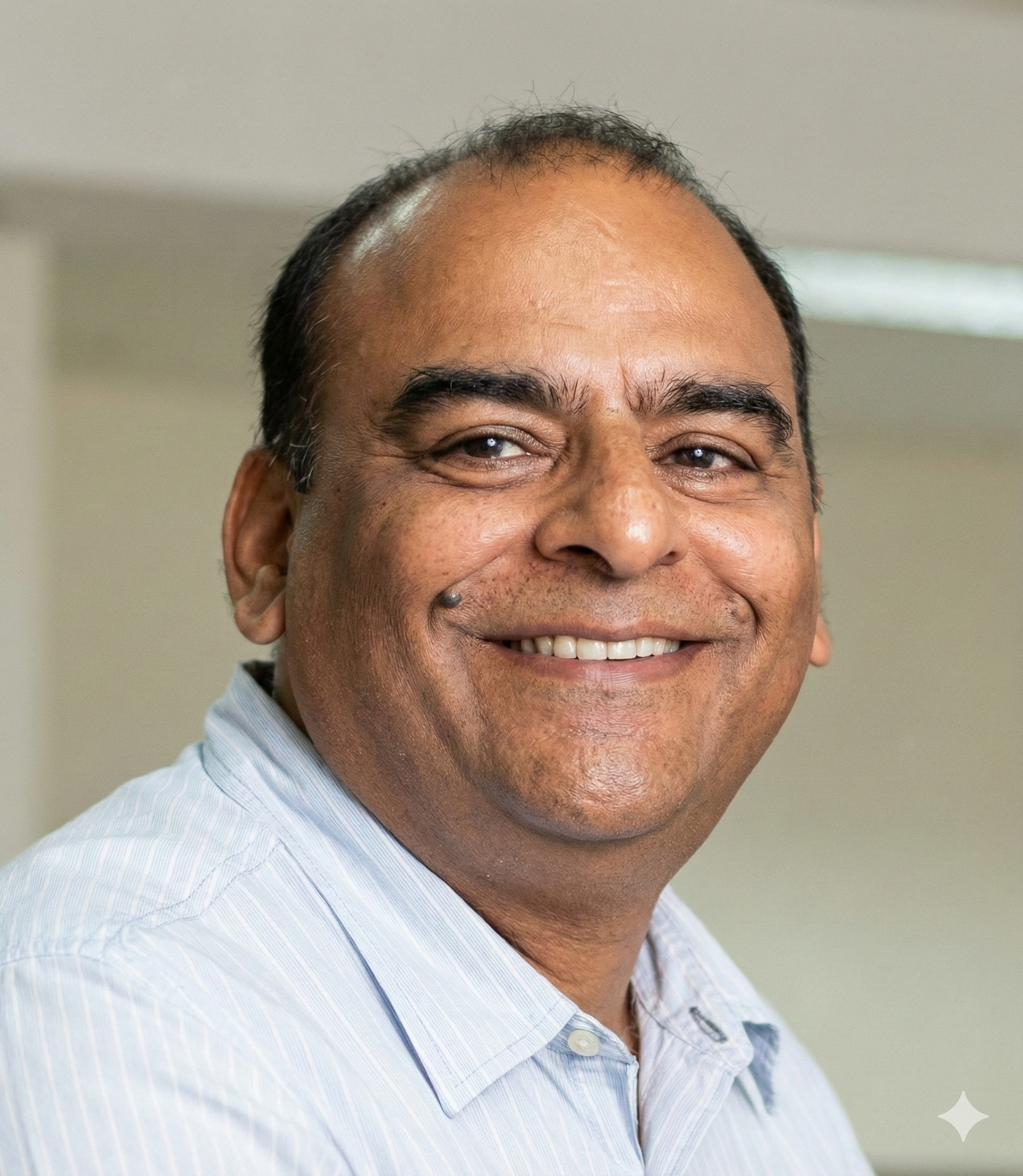
Pankaj Chaturvedi
Ex. Editor, National Book Trust (NBT), Ministry of Education, Government of India
M.Sc. in Mathematics
Some Notable awards:
- Bharat Bhushan Agrawal Smriti Puraskar (1994)
- Devishankar Awasthi Samman (2003)
- Ramchandra Shukla Puraskar (2003)
- Raza Fellowship (2019)
- Kalinga Literary Festival Book Award (2023)
Chief Editor (Environment, and Teacher Education, E&TE)
Mr. Chaturvedi has been a prominent and fearless voice in the Indian vernacular press, having held senior editorial positions at leading national dailies, including Amar Ujala and Dainik Bhaskar. By utilizing the massive reach of Hindi print media, he has consistently shifted the editorial gaze toward marginalized developmental issues, bridging the gap between grassroots realities and national policy.
As a fiercely rigorous environmental journalist and frequent columnist for platforms like the National Herald and Down To Earth, his reporting goes beyond superficial narratives. He has extensively investigated and documented the systemic crises facing the subcontinent, including the pollution of major glacial and non-glacial rivers, the catastrophic ecological degradation of the Aravalli range, the looming threat of desertification in agrarian states, and the severe impacts of urban atmospheric toxicity.
Throughout his prolific career, Pankaj Chaturvedi has been a prominent voice in Hindi journalism, having held senior editorial positions at leading national dailies, including Amar Ujala and Dainik Bhaskar. Currently associated with the National Book Trust (NBT), India, he has been instrumental in shaping developmental literature and children’s educational resources at a national level.
Transformative Frameworks in Teacher Education
While Pankaj Chaturvedi’s journalistic endeavours meticulously diagnose the sociopolitical and environmental maladies of the nation, his extensive work in teacher education represents his commitment to the systemic cure. Understanding that meaningful societal change is generational, Chaturvedi has been a prominent architect in reshaping India's educational pedagogy, particularly through his association as an Assistant Editor with the National Book Trust (NBT), India.
—Operationalizing the National Education Policy (NEP) 2020
Chaturvedi has been deeply involved in the intellectual discourse and practical implementation of the National Education Policy (NEP) 2020. He has consistently articulated that the Indian education system faces immense, structural challenges due to the vast geographical, linguistic, and cultural diversity of the subcontinent, and he views the NEP 2020 as a critical tool to address these disparities.
In his capacity as a thought leader and NBT representative, Chaturvedi has moderated and led high-level pedagogical sessions with organizations like UNESCO, emphasizing that the primary objective of educational policy must be holistic: to create "good humans with values, based on moral and social conscience" who can contribute positively to society. He advocates for a curriculum that explicitly moves away from colonial-era rote memorization and instead embraces "Traditional Indian Knowledge Systems," integrating indigenous wisdom seamlessly with modern global competencies and sustainable development goals.
His vision for teacher education involves comprehensive capacity building. For example, he has organised and led workshops for teachers on how to utilize alternative media, such as academic comic books, to make content engaging and learning interactive. This approach underscores his belief that teachers must be equipped not just with subject knowledge, but with modern, psychologically resonant methods of delivery.
—Multilingualism and the Democratization of Knowledge
A fundamental epistemological barrier in the Indian education system is the historical dominance of English and select dominant regional languages, which often marginalises minority vernacular speakers and restricts early cognitive development. Chaturvedi has aggressively tackled this issue through an intense focus on translation and multilingual literature.
Under his supervision at the NBT, extensive translation workshops have been organised to ensure that high-quality educational resources reach marginalised linguistic communities. For instance, he supervised a critical three-day translation workshop in Goa, inaugurated by Jnanpith Awardee Damodar Mauzo, where children's books originally published in English were meticulously translated into the Konkani language by local translators. Similarly, he oversaw initiatives to translate multiple NBT titles into the Bhoti language in Ladakh, ensuring that indigenous folklore, as well as modern science, become available in bilingual (Hindi-Bhoti and English-Bhoti) formats.
These initiatives are not merely linguistic exercises; they are profound acts of educational democratization. By ensuring that students can access developmental literature and scientific concepts in their mother tongues, Chaturvedi empowers localised cognitive development, prevents the alienation of minority students from the formal education system, and preserves India's rich tapestry of linguistic heritage.
Pedagogical Innovations in Children's Literature
Pankaj Chaturvedi’s most direct, lasting impact on the next generation has been through his prolific work as a writer, editor, and interactive storyteller within the realm of children's literature. Instrumental in shaping the NBT's renowned Nehru Bal Pustakalaya series—arguably the largest multi-lingual publisher of children's books in India—Chaturvedi has fundamentally redefined how educational content is structured and consumed by young minds.
—Narrative Science: Bridging the Cognitive Divide
A pervasive flaw in traditional science education is the heavy reliance on intimidating jargon, abstract theories, and complex diagrams, which often alienate children from empirical reasoning at an early age. Chaturvedi dismantled this barrier by pioneering a highly effective "Science in a Story" methodology.
As an author, his books such as My First Aeroplane Journey (illustrated by Irshad Kaptan) and Fun with Metro (Metro Ka Mazaa) are masterful examples of this pedagogical approach. These beautifully illustrated texts do not read like dry textbooks; instead, they chronicle the step-by-step emotional and sensory experiences of a child interacting with modern infrastructure and technology for the very first time. Through engaging narrative, children effortlessly absorb concepts of engineering, public transport etiquette, civic responsibility, and geography. He has also authored guides on pedagogy itself, such as Kahani Kahne Ki Kala (The Art of Storytelling), serving as a resource for educators.
His live storytelling sessions further exemplify this genius. During a highly acclaimed interaction with students at Kendriya Vidyalaya in Vasant Kunj, Chaturvedi captivated the audience by explicitly announcing that the session was "not going to be about 'studying' at all," but rather a "chit-chat about fun things". He utilised Hindi translations of Roald Dahl to capture their imagination before seamlessly transitioning into live, impromptu scientific demonstrations. Using a simple glass of water covered by a thin cloth and turned upside down without spilling a drop, he practically demonstrated gravitational force and atmospheric pressure without using a single complex equation. He followed this with anthropomorphic tales of airplanes refusing to shake hands with birds, and pencils saving runaway books by drilling holes in them—narratives that inherently taught basic physics and mechanical problem-solving. This approach, aptly described by observers as "a sweet candy made of vitamins and minerals," resulted in highly motivated children eager to dig out broken bangles to build their own kaleidoscopes, earning Chaturvedi the affectionate moniker "Chatur Ji" from school administrators.
—The Socratic Method in Experiential Environmental Learning
Chaturvedi believes that deep environmental and scientific consciousness must begin with immediate, localised sensory observation. During the Dharamsala Book Fair, held in a makeshift maroon hangar against the striking backdrop of the snow-peaked Dhauladhar mountains, Chaturvedi led a workshop for hundreds of school children based entirely on the theme of "close observation of the surroundings".
Rather than lecturing on abstract ecological theories, he employed a rapid-fire Socratic method of questioning to engage the students: What did you see while coming to the book fair? Did you see the snow on the mountain peaks? What colour is your water bottle? Does the carpet in the hall look more like a ripened jamun or an apple?. This barrage of relatable, highly sensory questions triggered a massive, enthusiastic response from the children, turning a quiet, passive gathering into a vibrant, interactive forum. By training children to critically observe their immediate environment—from the meteorological patterns in the sky to the micro-flora in the grass—Chaturvedi lays the foundational cognitive groundwork for future environmental stewardship. He teaches children that science and ecology are not distant subjects found in books, but lived realities unfolding around them every second.
Ecological Advocacy: Environmental Journalism
As an environmental journalist, author, and frequent columnist for prominent platforms such as the National Herald and Down To Earth, Pankaj Chaturvedi has operated at the absolute vanguard of ecological reporting in India. His work is characterised by a fierce refusal to accept superficial governmental narratives, consistently digging deeper to expose the biochemical, geological, and socio-economic realities of environmental degradation. His investigative rigour spans riparian ecosystems, orographic collapse, biodiversity loss, and urban atmospheric toxicity.
—Riparian Ecosystems and the Illusion of Restoration
Chaturvedi’s environmental discourse frequently dissects the systemic mismanagement of India’s vital riverine ecosystems. He authored the seminal Hindi book Majhdhar Men Dhar (published by Pravasi Prem Publishing), which provides an encyclopedic overview of the causes and effects of river pollution across the subcontinent, whilst proposing actionable paradigms for ecological restoration. His journalism moves beyond mere pollution metrics, examining the intersection of bureaucratic superficiality, religious sentiment, and industrial negligence.
—The Ganga: The Facade of 'Arth Ganga' and the 'Ganga Vilas'
In his searing critiques of the Ganga's management, Chaturvedi juxtaposes the aesthetic romanticism of pristine rivers—quoting William Wordsworth's 1798 reflections on the Thames—against the grim, toxic reality of India's holiest waterway today. He highlights the glaring contradictions between the government's highly publicised 'Namami Gange' project and its subsequent pivot to 'Arth Ganga'.
When the state launched the luxury river cruise 'Ganga Vilas'—a floating five-star hotel carrying 36 tourists across 3,200 kilometres from Varanasi to Dibrugarh at an exorbitant cost of approximately Rs 25,000 per night—Chaturvedi pointed out the stark, tragic irony. He noted that while immense public funds are allocated to tourism, economic livelihood circuits, and international publicity, the fundamental biological issue remains unaddressed. Human habitations and industrial complexes along the banks continue to drain raw, untreated filth directly into the river. His reporting underscores a critical thesis: the economic commodification of a river system cannot substitute for its biological and hydrological restoration.
—The Yamuna: Toxic Froth and Cosmetic Chemistry
Chaturvedi’s coverage of the Yamuna River, particularly during the Chhath Puja festival, further exposes the performative nature of municipal environmentalism in the National Capital Territory (NCT) of Delhi. With an estimated five million devotees congregating at the riverbanks for 36 hours to perform religious rites, the Yamuna is routinely covered in a thick, toxic white foam—a visual manifestation of severe industrial pollution and untreated sewage.
Chaturvedi meticulously documented how the local government, rather than addressing the root causes of the effluents, resorted to spraying silicone defoaming agents, polyoxypropylene, and other synthetic substances to temporarily mask the foam from the surface. He fiercely argues that this cosmetic chemical intervention is a sham step taken under immediate political and social pressure. Not only does it fail to clean the river, but it actively introduces a new source of persistent synthetic pollutants into the water, hiding the toxicity "iceberg" from the devotees who step into the water for holy rituals.
—Non-Glacial Rivers and the Paradox of Indore
Beyond the major glacial rivers, Chaturvedi has raised urgent alarms regarding the disappearance of India's non-glacial rivers. He notes that these vital arteries are falling victim to rising global temperatures, erratic monsoon cycles, and unchecked localised pollution, posing a severe threat to the water security, agriculture, and industry of dependent communities.
Furthermore, his investigative piece on "Indore's paradox" brilliantly deconstructs the narrative of India's "cleanest city". He reveals that while Indore may boast spotless streets and top rankings in sanitation surveys, it simultaneously battles a severe, hidden crisis of contaminated drinking water, which has led to fatal public health consequences. This paradox forces readers to question the superficial metrics by which urban success and environmental health are currently measured.
Orographic Degradation and the March of Desertification
Chaturvedi’s geographical reporting reveals a profound understanding of how localised environmental destruction triggers cascading macro-climatic disasters, threatening the food security of the entire subcontinent.
—The Aravalli Range: A Shield Destroyed
The Aravalli range is a 650-million-year-old mountain system stretching 692 kilometres from Khed Brahma in Gujarat to Raisina Hill in Delhi. It serves as a crucial orographic barrier that steers monsoon rain-bearing clouds and checks the eastward expansion of the Thar Desert. Chaturvedi has chronicled the catastrophic decimation of this ancient range due to rampant, illegal mining and real estate encroachment.
He presents horrifying empirical data: over the past four decades, the green cover of the Aravallis has plummeted from roughly 80 percent to a mere 7 percent. In many locations, towering mountain peaks have been completely obliterated, replaced by mining pits nearly 150 feet deep. While noting the Supreme Court's constitution of a nine-member committee to save the range, Chaturvedi's writings express a cautious, almost cynical hope. He emphasises the dire macro-implications: if these hills disappear entirely, the rainfall patterns of northwest India will alter irrevocably, turning fertile farmlands barren, destroying agrarian livelihoods, and allowing dust storms to ravage the interior.
The Looming Desertification of Punjab
In a chilling forecast based on empirical agricultural and climatic data, Chaturvedi explores the looming desertification of Punjab, the traditional breadbasket of India. He outlines a multifaceted hydrological crisis: water availability in the state's five rivers has decreased from 17 million acre-feet to 13 million acre-feet, while per capita usage remains unsustainably high at 380 litres per day (compared to the national average of 150 litres).
He attributes this impending disaster to the relentless cultivation of water-intensive paddy crops, driven by higher short-term economic returns and agricultural policies. Chaturvedi masterfully explains the devastating chemical cycle: waterlogged fields, a requirement for paddy, accumulate layers of saline deposited by indiscriminate pesticide and chemical fertiliser use. In subsequent cycles, farmers require even more water to flush the salinity, creating a fatal feedback loop. Citing the Central Ground Water Board and a climate change research paper by Punjab Agricultural University (PAU), he warns that agricultural demand has grown to 43.7 lakh hectare meters (73 percent raised from groundwater), and groundwater levels are projected to drop below 300 meters by 2039. Chaturvedi's reporting makes it clear that the Thar Desert is actively taking root in neighbouring states due to this over-exploitation.
Biodiversity, Wildlife Corridors, and Indigenous Ecologies
A core tenet of Chaturvedi’s environmental philosophy is the intrinsic value of biodiversity and the recognition that unchecked human infrastructure development cannot perpetually supersede wildlife preservation and indigenous rights.
—The Silent Massacre of Elephants
Chaturvedi has drawn national attention to the tragic, systemic destruction of India's elephant populations, which are vital for preserving forest ecosystems and biodiversity. He notes that for centuries, elephants have utilised 88 historically designated "elephant corridors" across the country (22 in the northeast, 20 in central India, and 20 in the south) to migrate for food and water.
However, these generational biological paths are increasingly obstructed by human settlements, high-speed railways, and concrete construction projects. Elephants, relying on generational memory, encounter these new obstacles with fatal results. Chaturvedi reported extensively on a series of grim incidents: the electrocution of three elephants (including a calf) in Odisha's Buramal forest, and the deaths of ten elephants (including nine females, two of whom were pregnant) in Madhya Pradesh's Bandhavgarh just before Diwali. His journalism frames these events not as isolated accidents, but as a "silent massacre" born of systemic governmental apathy and deeply flawed infrastructure planning.
—The Great Nicobar Project: Development as Disaster
In an incisive critique of the NITI Aayog's Great Nicobar Island development project, Chaturvedi questions the ethics of initiating massive concrete infrastructure within a region globally recognised for its unique, diverse, and endangered ecosystems. The Andaman and Nicobar group, comprising 572 islands, features some of the best-preserved tropical rainforests globally and was included in UNESCO's Man and the Biosphere Programme in 2013.
Chaturvedi points out the highly opportunistic timing of the project's Request for Proposal (RfP) in September 2020, amidst the chaos, death, and economic instability of the global pandemic. He advocates fiercely for the protection of the aboriginal populations whose habitats, dialects, and lifestyles are threatened by what he terms a "development disaster". He poignantly captures the plight of the locals with the quote: "We didn't pay for fish, now we worry about jobs," brilliantly illustrating how aggressive, top-down developmental models strip indigenous communities of their natural self-sufficiency, forcing them into precarious, capitalist wage labour systems.
Urban Atmospheric Toxicity and the Fallacy of Technocratic Fixes
Chaturvedi’s reporting on urban air pollution reflects a deep skepticism of technocratic, reactive solutions that ignore the need for behavioural and systemic reform at the source of emissions.
—The Air Quality Crisis and the Dangers of Cloud Seeding
As the Air Quality Index (AQI) routinely plummets to hazardous levels across Indian cities—affecting not just megacities like Delhi and Mumbai, but also smaller industrial and regional hubs like Patna, Gwalior, Hanumangarh, Baddi, and Mandideep—Chaturvedi lambasts both public indifference and governmental failure. He notes that stepping out for fresh air feels like "dragging dozens of cigarette puffs straight into your lungs," and compares current bureaucratic efforts to "mopping a floor with the tap left running".
He is particularly critical of sensational, high-tech proposals like artificial rain (cloud seeding) to clear winter smog. Chaturvedi breaks down the dangerous chemistry involved, explaining that the silver iodide-laced particles used in seeding can settle on the ground, potentially harming plants, animals, and contaminating water bodies. Furthermore, he warns of a secondary disaster: artificial rain interacting with the nitrogen oxides (NOx) emitted by the widespread use of Compressed Natural Gas (CNG) vehicles could produce toxic acid rain. By referencing the severe artificial flooding seen in Dubai in April 2024 due to cloud seeding experiments, he illustrates the unpredictable and potentially catastrophic consequences of tampering with complex weather systems in highly populated areas, which could lead to waterlogged streets spewing even more pollutants.
__________
At Ground Report India, Mr. Chaturvedi provides strategic vision to the publication’s mission of highlighting "unreported" India, ensuring that the intersection of environment and education remains at the forefront of the global developmental discourse.
Editors, BoE-India
 | Satish MishraMaharashtra Former Editor, Nav Bharat Times |
 | Prof Sheela Daga PhDUttarakhand Director, Vishwaguru Deep Ashram Research Centre |
 | SanjeebaUttar Pradesh |
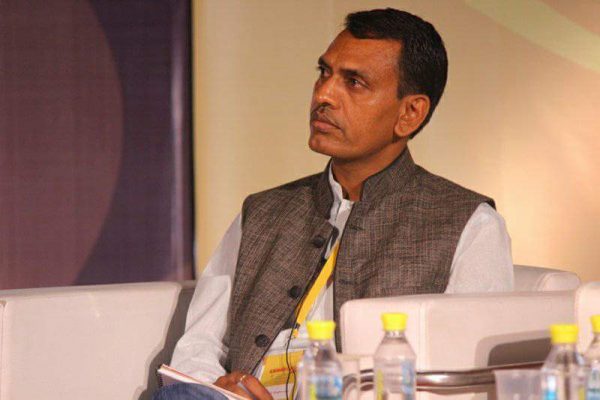 | Bhanwar MeghwanshiRajasthan |
 | Prof Ram Pratap Yadav PhDUttar Pradesh |
 | Er Sachin Raj Singh MBAUttar Pradesh |
 | Fr Baiju ChakkalKerala |
The Patrons
Prof H C Verma PhD, IIT Kanpur
Amla Ashok Ruia, Maharashtra
Industrialist, Environmentalist and Social Entrepreneur
The Honorary Advisors - India
- Pankaj Chaturvedi, Former Editor, National Book Trust
- Dr Lenin Raghuvanshi, Uttar Pradesh
Gwangju Human Rights Award (2007)
ACHA Star Peace award (2008)
International Human Rights Prize of the City of Weimar (2010)
Ashoka Fellow (2001) - Krishna Kumar Jakhar, Rajasthan
Zero-Budget Natural Farmer
Environmentalist and Farmer Leader
National President, Khet Khalihan Morcha - Suneel Chheda, Maharashtra
Environmentalist - Prof Jyotirmoy Goswami, West Bengal
Author, Scholar - Prof Dr Rupnarayan Sett PhD, Madhya Pradesh
- Fr. Anto Paul, Nagaland
Director, Peace Channel
Nagaland, North-East Region - Prof Lebon Serto PhD, Meghalaya
Writer, Peace Activist
Meghalaya, North-East Region - P K Siddharth IPS Rtd, Jharkhand
Author, Critic, Educationist and Social Entrepreneur - Nagendra Singh Tyagi, Bihar
- Prem Singh, Uttar Pradesh
- Ravindra Bharti, Bihar
Writer - Promod Chawla, Delhi
Scholar and Activist - Sudhir Gandotra, Delhi
Humanist Movement Activist - Dr Amitabh Thakur IPS (Rtd)
B.Tech, M.Tech (Indian Institute of Technology, IIT)
PhD (Indian Institute of Management, IIM) - Dr Nutan Thakur PhD, DLit
- N. S. Venkataraman, Editor, Tamilnadu
Managing Editors, BoME-India

Er Dharmendra Kumar

Er Harjeet Singh Chahar MBA

Harsh Wardhan
Sub Editors
 | Ramnarendra Karma, Chhattisgarh |
 | Devbrat Singh MStat, Uttar Pradesh/Bihar |
 | Anamika Bajaj, Karnataka/Rajasthan |
 | Sunny Raj, MDes, Delhi/Bihar |
 | Rajneesh Sachan |
 | Advocate Alok Ranjan, Uttar Pradesh/Bihar |
 | Prof Indrajeet PhD, Uttar Pradesh/Bihar |
The Honorary Legal-Advisors
Advocate Prashant Umrao
Prashant Umrao stands as a distinguished and often controversial figure in the Indian legal and social landscape. Practicing primarily at the Supreme Court of India and the Delhi High Court, he has carved a niche for himself as a public-interest advocate, social activist, and prolific writer. Umrao is renowned for leveraging the judicial system to address significant issues of corruption, constitutional integrity, and social governance, frequently engaging in high-stakes litigation that captures national attention.

Prashant Umrao's legal career, which began in 2015, has been characterised by a specialization in constitutional and civil law, making him a key player in several landmark cases. Beyond his private practice, his official appointments reflect a deep engagement with both the legal establishment and the social sphere:
- Standing Counsel for the State of Goa: This prestigious role entrusts him with representing the State of Goa's interests before the Supreme Court, highlighting his proficiency in state-level legal affairs.
Academic Foundation
His professional trajectory is underpinned by a diverse educational background that combines technical expertise with legal acumen. He holds a degree in Computer Science from Ewing Christian College, Allahabad, a foundation that likely informs his modern approach to advocacy and communication. This was followed by a degree in Law from Chaudhary Charan Singh (CCS) University, providing the legal framework for his activist pursuits.
Landmark Legal Interventions
Prashant Umrao is perhaps best known for his role as a petitioner in several high-profile cases that have had a direct impact on public policy and constitutional interpretation:
1. The 'Office of Profit' Disqualification Case (AAP MLAs)
This case cemented Prashant Umrao's reputation as a vigilant guardian of constitutional standards.
- The Action: In 2015, he filed a pivotal petition before the President of India. The petition challenged the appointment of 21 Aam Aadmi Party (AAP) MLAs in Delhi as Parliamentary Secretaries, arguing that these positions constituted an unconstitutional "Office of Profit" (OoP) for elected legislators. The constitutional prohibition is designed to maintain the separation of powers and prevent executive overreach.
- The Outcome: The proceedings continued for three years, culminating in the Election Commission of India (ECI) recommending disqualification. The ECI’s recommendation was accepted by the President on January 21, 2018, leading to the invalidation of the appointments of 20 of the MLAs. This landmark decision reinforced the strict interpretation of the "Office of Profit" clause.
2. Challenge to the Aligarh Muslim University (AMU) Mess Tradition
This intervention focused on safeguarding the fundamental rights of non-Muslim students in educational institutions.
- The Conflict: Umrao challenged a long-standing, decades-old tradition at Aligarh Muslim University (AMU) where, during the month of Ramadan, meals (breakfast and lunch) were reportedly withheld from non-fasting students during daylight hours.
- The Impact: By utilizing social media and initiating legal pressure, Umrao successfully raised concerns about the discriminatory nature of the tradition. The subsequent public and legal pressure led the university administration to revise its policy, ensuring that the campus mess began providing meals to non-fasting students, thereby upholding the principle of inclusivity.
3. Recent Legal Engagements (2023–2026)
His commitment to contemporary legal and social issues remains active:
- Supreme Court Bail (2026): In a significant ruling in early January 2026, the Supreme Court made the interim protection granted to him absolute. The case originated from a 2023 tweet concerning migrant workers. The Supreme Court granted him bail, noting that the investigation into the matter had been completed.
- Protection of Religious Sentiments: Umrao has a consistent history of filing legal challenges in matters concerning the protection of religious sentiments and public morality. Notable examples include filing First Information Reports (FIRs) against the film PK and petitions addressing the conduct of former officials of the Central Board of Film Certification (CBFC).
Awards and Recognition
His blend of legal practice and social activism has earned him significant recognition and several prestigious awards:
- National Changemakers Award (2018): This honour was presented by the Vice Chancellor of Jawaharlal Nehru University (JNU), recognizing his role in bringing about social and legal change.
- ‘The Hero’s Award’
- Swarajya Rakshak Samman
Prashant Umrao is an active member of the Delhi High Court Bar Association (DHCBA). He is a prominent voice in the national discourse, frequently engaging with themes of national integrity, constitutional law, and social justice. He leverages platforms like X (formerly Twitter) to directly engage with the public, disseminate his views on public policy, and rally support for his legal and social causes, solidifying his role as a public-facing advocate for change.
Advocate Shashi Kumar Suman

Advocate Tamanna Pankaj
Advocate | Human Rights Specialist | Legal Commentator | Strategist

Tamanna Pankaj stands out as a highly accomplished and multi-faceted legal professional, whose career is a testament to the seamless integration of rigorous courtroom practice with an unwavering commitment to social justice. A dynamic and active practitioner at the High Court of Delhi, she embodies a modern approach to law, using her expertise to effect tangible change in both the legal system and the lives of the marginalised.
Professional Philosophy: The Law as a Catalyst for Social Transformation
Tamanna's core belief is that the law extends far beyond its codification; it is a vital, living instrument for social good. Her professional philosophy is centred on the principle of human-centric jurisprudence. She strategically leverages her dual mastery in high-stakes litigation and specialised human rights advocacy to not only challenge legal precedent but also to address the root social causes of injustice. This approach ensures that, in every case, the technical application of law is harmonised with the fundamental "human" element, guaranteeing comprehensive and empathetic representation.
Key Career Milestones & Impactful Contributions
Tamanna's trajectory demonstrates a consistent commitment to high-level practice and significant institutional impact:
Pivotal Role in Human Rights and Gender Justice: Currently, she serves as a key Legal Counsellor at the esteemed Guild For Service (GFS). This organisation, under the inspiring leadership of Dr. Mohini Giri (recipient of the Padma Bhushan and former Chairperson of the National Commission for Women - NCW), is a powerhouse for social reform. In this critical role, Tamanna is responsible for providing essential legal aid, counseling, and strategic intervention for marginalised individuals, with a pronounced focus on securing women’s rights and facilitating their social and economic rehabilitation. Her work here directly translates legal theory into real-world protective measures.
High Court Litigation Expertise: As a seasoned practitioner at the High Court of Delhi, she possesses substantial experience across a wide array of legal forums, including District Courts and other specialised tribunals. Her practice involves sophisticated handling of diverse civil, criminal, and constitutional matters, showcasing her capability to navigate the intricacies of the Indian judicial system with precision and effectiveness.
Diverse Jurisdictional Insight: Her career portfolio includes valuable experience across various specialised legal environments, enriching her strategic perspective:
National Green Tribunal (NGT): Gaining critical, hands-on experience in environmental jurisprudence, allowing her to address complex cases concerning sustainable development and regulatory compliance.
Universal Legal & Tripaksha Litigation: Sharpening her skills in handling a broad spectrum of commercial, civil, and criminal litigation, proving her versatility and adaptability in high-pressure legal settings.
Young Arena Litigators: Developing and executing innovative strategies for confronting emerging legal and policy challenges, marking her as a forward-thinking litigator.
Academic Prowess and Legal Commentary
Tamanna’s advocacy is underpinned by a robust academic foundation. She secured her Postgraduate degree in Human Rights Law in 2017, which provided her with a deep, theoretical grounding in international and domestic human rights frameworks—a knowledge base she actively employs in her practice.
Beyond the courtroom, Tamanna is celebrated as a prolific Legal Writer and Commentator. Her affinity for the written word began early, with contributions to popular children's magazines, which evolved into a powerful tool for public legal education. Today, she translates complex legal, constitutional, and social issues into accessible, authoritative commentary. Her regular contributions to prominent legal websites and digital platforms make her a trusted voice in the public discourse, effectively bridging the gap between esoteric legal concepts and the understanding of a broader, engaged audience.
Core Areas of Specialization
Tamanna Pankaj offers expert counsel and advocacy across the following key areas:
Human Rights & Gender Justice (Specializing in women's empowerment and marginalised groups)
High Court Litigation (Constitutional, Civil, and Criminal matters)
Environmental Law (Expertise gained at the NGT)
Legal Research & Content Strategy (Authoritative public legal commentary)
Social Counseling & Alternative Dispute Resolution (ADR) (Focus on mediation and reconciliation)
“Tamanna Pankaj represents a new generation of lawyers—those who are as comfortable navigating the intricate constitutional and procedural challenges of the High Court as they are effectively advocating for the fundamental rights and social rehabilitation of the underserved. She is a lawyer of conviction, competence, and compassion.”
Representatives - India
- Dr Dheerendra Umrao
- Rohtas Singh Rana, Madhya Pradesh
- Abhishek Singh Parihar, Madhya Pradesh
- Dr Kumar Vishwapriya, Delhi
- Sanjay Sajjan Singh, Bihar
- Prafull Chandra Ghosh, Bihar
- Amrish Kumar, Bihar
- Chandra Bhushan Kumar, Bihar
- Vikas Kumar Poddar, Chhattisgarh
- Rajesh Yalam, Chhattisgarh
- Anokh Kumar, Chhattisgarh
- Prof Prashant Kumar Katiyar, Uttar Pradesh
- Dr Lata Jeet Chahar PhD, Uttar Pradesh
- Priyanka Bais, Greater Noida
- Prateek Katiyar
- Prabuddh Sachan, Haryana